
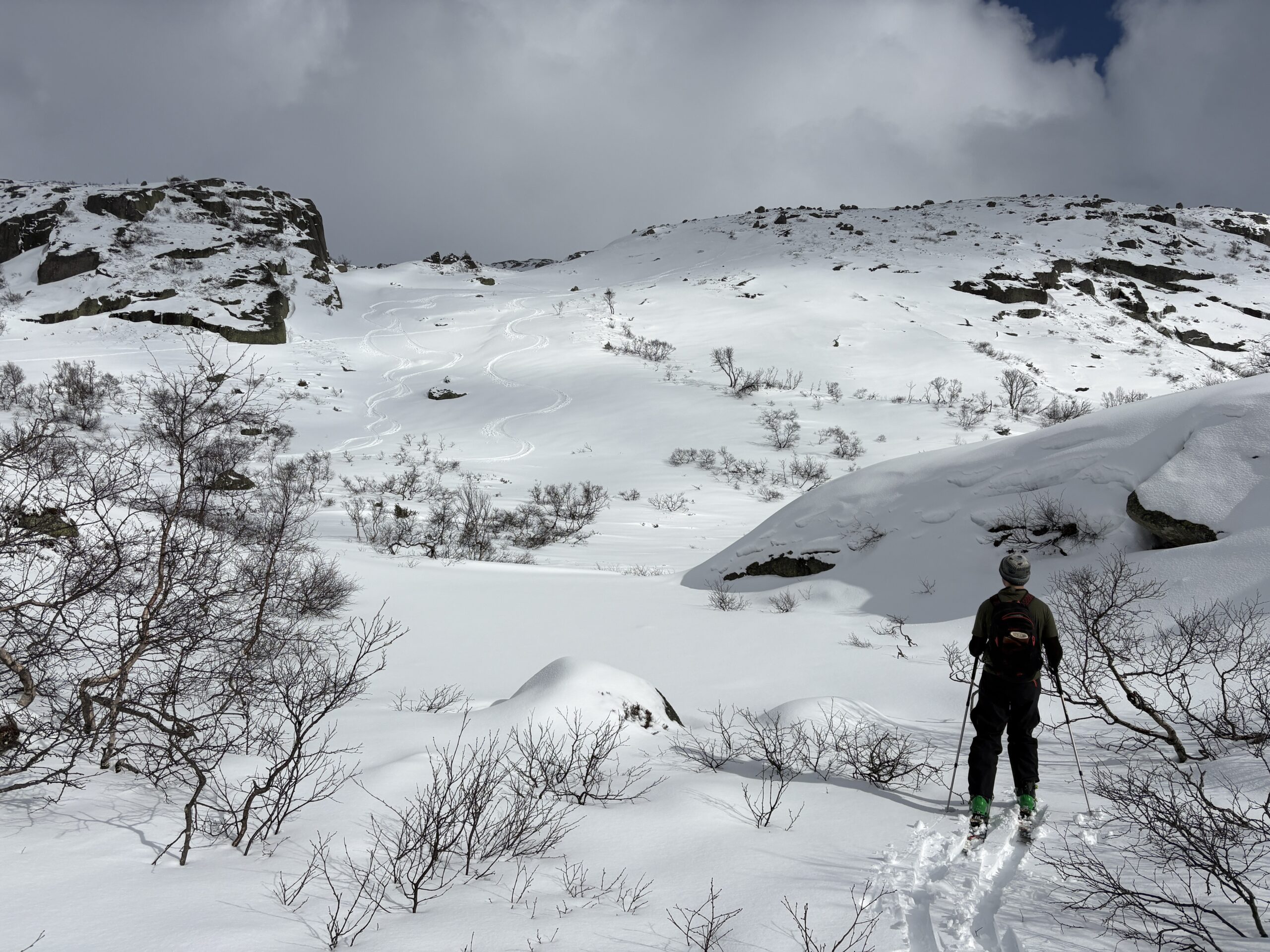
They say Norwegians are born on skis. And honestly, after living here for a few years, I believe it. Even Norwegians who say ”oh no, I don’t really ski” will outrun any foreigner who dares to consider themselves an intermediate cross-country skier.
What Does “Going Skiing” Actually Mean?
In the Netherlands (and much of Western Europe), when someone says they are going skiing, they almost always mean alpine skiing. Downhill. A ski resort, a gondola, après-ski, the whole package. In Dutch, we simply call it “skiën”, and the default assumption is that you are heading to Austria or Germany for a week on the slopes.
In Norway, that is called slalom, or sometimes alpint (though technically slalom is one specific discipline within alpine skiing). If you want to specify downhill skiing in Norway, use slalom.
When a Norwegian says they are going skiing, på ski, without any further specification, they most certainly mean langrenn. Cross-country skiing. Tracks through the forest, classic technique or skating style, potentially for several hours. This is the national sport, the default, the thing children grow up doing on weekend mornings.
Alpint (Alpine / Downhill Skiing)
Norwegian: alpint or slalom Dutch: skiën / slalom German: Skifahren / alpines Skifahren English: alpine skiing / downhill skiing

This is what most Western Europeans think of when they hear the word skiing. Fixed heel bindings, stiff boots, chairlifts, groomed pistes. Norway has excellent ski resorts, Hemsedal, Trysil and Røldal among them, but this is not where Norwegian skiing culture is rooted. The resorts are popular, but they occupy a different cultural place than in, say, Austria or France.
Langrenn (Cross-Country Skiing)
Norwegian: langrenn, Dutch/German: langlaufen, English: cross-country skiing

This is the soul of Norwegian skiing. Groomed tracks, narrow skis, and a technique that takes years to look natural.
There are two distinct styles, and they use different equipment.
Klassisk (Classic): The traditional technique, where you ski in parallel tracks and push off with a kick motion. Classic skis have a grip zone under the foot (either wax-based or a textured “waxless” pattern) that prevents them from sliding backwards when you push down. The skis fit into pre-groomed parallel tracks in the snow.
Skøyteski (Skate Skiing): A more modern technique, developed in the 1980s, where you push off at an angle like an ice skater. Skate skis are shorter and stiffer than classic skis, and you use a different set of groomed tracks. Skate skiing is faster and looks considerably more athletic when done well.
In the Netherlands, langlaufen has a reputation as something older people do. Outside my family, I don’t know any Dutchies under 40 who go cross-country skiing somewhat regularly. Norway has no such stigma attached to it. Here, langrenn is competitive, taken seriously, and done by people of all ages.
I own a pair of cross-country skis. I use them occasionally, but I find them quite scary, especially on icy downhills. Not having grown up doing langrenn, I struggle to keep my balance. I much prefer something with a bit more width under my feet.
Fjellski (Mountain Skis / Backcountry Cross-Country Skis)
Norwegian: fjellski English: mountain skis, or backcountry cross-country skis (sometimes abbreviated as BC XC skis) German: there is no perfect equivalent, but the closest terms are Gebirgslanglaufski (mountain cross-country ski) or sometimes Tourenski, though this overlaps with randonnée terminology

The fjellski is, to me, one of the most interesting pieces of equipment. It sits somewhere between a langrenn ski and a full-on backcountry ski, and it fills a role that simply does not have a clean translation in most other skiing cultures.
Fjellski are wider than langrenn skis, with steel edges. They are built for varied terrain: forest tracks, open plateaux, and moderate off-piste conditions. The heel is typically free (like a langrenn binding), which means you can walk with a natural stride. You can attach climbing skins to the base for ascending steeper terrain, and then remove them on the way down. Some fjellski bindings allow you to lock the heel down for better control on descents, though this varies by model.
The boot is sturdier than a langrenn boot, which is part of why I find this category of ski appealing. You have more ankle support, more control on the way down, and the wider ski provides more overall stability.
I do not own a pair yet, but it is next on my list. For the kind of mountain touring I enjoy, fjellski make more practical sense than my langrenn skis. They are the everyday ski for many Norwegians who head out into the fjell (mountains) on weekends.
Randonnée / Turski (Alpine Touring Skis)

Norwegian: randonnée or turski Dutch: tourski German: Tourenskier or Skitourenski English: Backcountry ski’s or alpine touring skis
Randonnée skis look, at first glance, like regular alpine skis. They have the same width and sidecut profile as a downhill ski, with hard boots and releasable bindings. The crucial difference is in the binding mechanism: the heel can be released, allowing you to walk uphill with a relatively natural gait. You attach climbing skins to the base for the ascent, then lock the heel back down and remove the skins for the descent.
The result is a ski that performs well on steep downhill terrain (much better than a fjellski in aggressive conditions) but also allows you to earn your turns by skinning up under your own power.
The Norwegian term turski is worth knowing, as it is sometimes used interchangeably with randonnée. Technically speaking, “tur” just means “trip” or “tour”, so turski is a broad term that can refer to any ski used for touring (including fjellski). In practice, when someone in a Norwegian ski shop refers to randonnée, they typically mean the alpine touring setup with hard boots and lockable bindings.
Telemark Skiing

Norwegian: telemark English: telemark skiing German: Telemark-Skifahren
Telemark skiing deserves its own section, partly because it is intresting from a historical perspective. It was invented in Norway in the 19th century. Sondre Norheim, often called the father of modern skiing, developed the turning technique and the flexible binding that made controlled downhill turns possible. Without Telemark, the entire history of modern skiing looks different.
The technique involves a deep, lunging turn where the back knee drops toward the ski, with the heel free throughout. It is demanding, elegant when done well, and quite humbling when you are learning. The equipment is a hybrid: wider skis suited to a range of terrain, combined with a free-heel binding that has more in common with a cross-country setup than an alpine one.
A Quick Overview

To pull this all together:
Alpint (alpine/downhill): fixed heel, hard boot, ski resort, groomed pistes. What most Western Europeans mean when they say “skiing.”
Langrenn classic: free heel, soft boot, groomed parallel tracks, kick and glide technique. The Norwegian default.
Langrenn skøyte (skate skiing): free heel, slightly stiffer boot, skating technique, faster and more athletic.
Fjellski: free heel (with optional heel lock), sturdier boot, steel edges, wider ski, built for varied mountain terrain. Great for weekend trips into the Norwegian hills.
Randonnée / turski: looks like an alpine ski with a releasable heel, hard boot, ideal for steep backcountry descents after skinning up.
Telemark: free heel, wide ski, the historic Norwegian technique that started it all.
Scandinavia v.s.The Alps
Understanding the terminology is not just useful for conversations at the watercooler. It matters when you are buying equipment, planning a trip, and especially when you are calibrating your expectations for what a ski day in Scandinavia actually looks like.
Because it is quite different from the Alps.
If you have grown up skiing in Austria, France or Germany, you are probably used to a certain rhythm: a few runs in the morning, a long lunch at a mountain restaurant with a beer or two, a couple more runs, and then apres ski in the evening. That is a perfectly good time, but it is not what you will find in Norway. Not by a long stretch.
Scandinavians are self-reliant by default, and this is especially visible on skis. The standard approach is to pack your own food. A thermos of coffee, some sandwiches, and a chocolate bar. On longer trips into the fjell, you will see people pulling out small gas burners or finding a spot at one of the fire pits that many resorts and trail networks maintain specifically for this purpose. You bring your own pølse (sausages), wrap them in lompe (a soft Norwegian flatbread), and eat them standing up in the snow with cold fingers. It sounds Spartan, and in a way it is, but it is also genuinely one of the more enjoyable parts of a Norwegian ski day once you get used to it.
The bigger resorts do have proper restaurants and cafeterias where you can get a hot meal, but do not expect a menu with twelve options and a wine list. It is functional, warm, and usually pretty good. The point is to refuel and get back out there.
Après-ski exists too. Afterski, as it is called here, is a real thing at the main resorts. But it is nothing like the scale or intensity you find in the Alps. It is more a couple of beers with friends at the end of the day than an event in itself.
None of this is a criticism. If anything, I find it refreshing. The main thing is to have the right mindset and preparation. Dress properly, bring food, expect fewer services than you are used to, and lean into its self-sufficiency. Once you stop waiting for the experience to look like an Alpine ski holiday, you start appreciating what it actually is.