
We are spending our late summer holiday in Japan. “Summer” is a bit generous for October, but by Norwegian standards it still feels like it: around 25 degrees during the day and a chilly 10 to 15 at night.
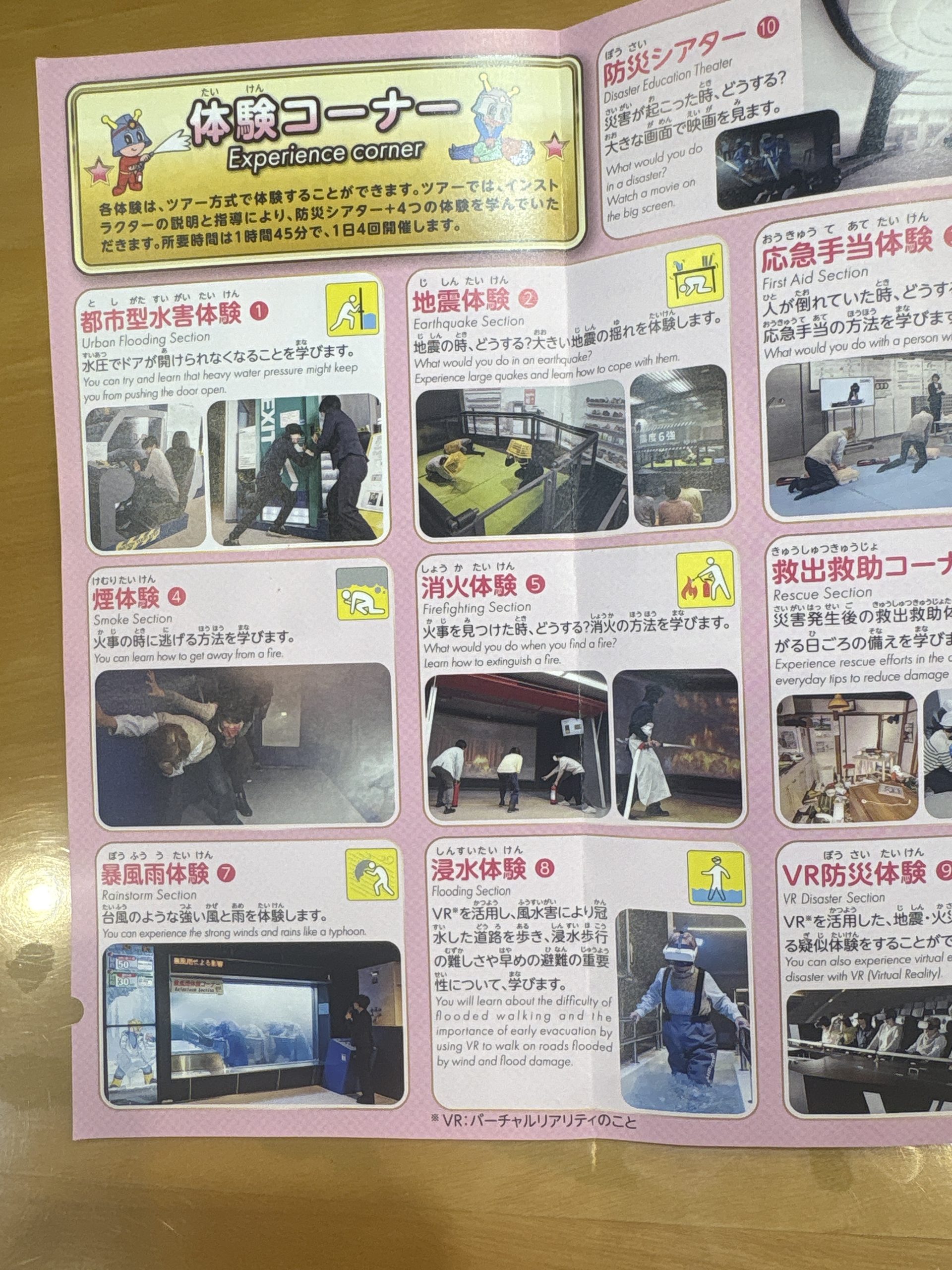
We landed in Tokyo and spent the first three days exploring the city. One thing we did was visit the disaster museum. Maybe not everybody’s idea of a holiday outing, but I really enjoyed it. It is entertaining and very informative. In just two to three hours, you get a good insight into how to act and how to prepare for different disasters.
The Tokyo Fire Department runs the centre, and entry is free. It is aimed at Japanese visitors, but most things have English subtitles or summaries. You have to book experiences in advance, but you can ask at reception if there are any spare spots. We arrived in the morning, and there were two spots left for the afternoon.
We started with a VR experience, where you are put in the shoes of someone going through a house fire and an earthquake. Even the VR chairs shake, which makes it surprisingly immersive. After that, it was time for the hands-on part: a couple of smoke-filled rooms where you had to find your way out, followed by the second experience, an earthquake simulator.
I learned that these two experiences are closely related. Fires that follow an earthquake are often more devastating than the earthquake itself, so much of the preparation focuses on fire: turning off the gas, putting out small fires before they spread, and getting out safely.
The smoke room didn’t teach me much new, but I did notice one thing. I missed almost all the emergency exit signs. When you crouch low to stay under the smoke, head-height signs are above you and hidden in it. The best place for exit lighting is actually near the floor.
The earthquake simulator was a real eye-opener. It can recreate different earthquakes from Japan’s past, and they were a lot stronger than I expected. We were shown how to act. If there is a table, you crouch under it and hold on to the legs diagonally, so the table does not topple over. If there is no table, you sit on your elbows and knees. You should not lean so far forward that your head touches the ground, as the shaking can be so intense that it can rip your skin on a hard surface.
We feel well prepared for the rest of our trip now that we know the emergency services. The Japanese take preparedness and safety management very seriously, and you can see it everywhere. For example: extensive instructions in all public facilities, plenty of traffic wardens, safety barriers at the metro lines and work overalls for refuse collectors with built-in air conditioning. I am looking forward to seeing and learning more about this culture and its innovation.