
Most content about personal websites and blogs focuses on which platform to use or how to optimise for SEO. That’s where the affiliate money is. But the more interesting question, and the one that gets asked a lot less, is why you should have a personal website in the first place.
I’ve been running my own website for over three years now. In that time, I’ve written well over 100 blog posts, connected with professionals from around the world, reconnected with friends and collegues and used it to land my career job in Norway. Here’s why everyone should invest in a personal website.
It’s a Serendipity Vehicle
David Perell coined the term “serendipity vehicle” to describe structures that increase the likelihood of fortunate discoveries happening to you.
Your unique perspective, knowledge, and skills are only valuable when others know they exist. It will be hard to predict which connections will be relevant for you, we simply cannot predict. But that somebody will be interested in your perspective and knowledge at some point in the future is as good as certain.
A personal website creates the surface area where people can learn about you and connect.
It Helps You Get Hired
Employers will Google you. That’s just a fact. The question is: what do they find when they do?
With a personal website, you control the narrative. Instead of hoping they stumble across a decent LinkedIn profile, you can show them exactly what you do, what you’re good at, and what drives you. It builds trust before you’ve even had a conversation.
But there’s another angle that is just as powerful: reciprocity.
When you meet someone at a conference or connect on LinkedIn, most people don’t have anything to offer. They just want something, a job, an introduction, advice. A personal website changes that dynamic. After meeting someone, you can send them something useful: “I wrote a blog post about this topic, thought you might find it helpful.”
This reframes self-promotion into generosity. You’re not asking for something; you’re giving something. And in my experience, that’s far more memorable.
It Makes Learning More Effective And More Fun
I used my blog to stay motivated during my Master’s in Risk Analysis. Writing summaries of what I was learning served two purposes: it helped me better understand the material, and it created resources others could use.
There’s something about writing for an audience, even a hypothetical one, that changes how you approach the work. It’s much more motivating to write a summary that everyone can use than to write notes just for yourself.
Yes, your classmates might benefit and get better grades, increasing the competition in the short run. But look at the long term: those classmates become your professional network, and future students in the same programme might find your work years later.
Both current students and working professionals have reached out after finding my course summaries. The effort I put in during my studies continues to pay dividends.
You Own It
When you post on social media, you’re renting space on someone else’s platform. They control the algorithm, they own the data, and they decide what gets shown and to whom.
With your own website, you own everything. The content is yours. The traffic is yours. The data is yours. Yes, you’ll have fewer eyeballs and less chance of going viral. But the attention you do get is yours to do with as you please.
This matters more as you think long-term. Platforms change their rules, algorithms shift, and accounts get suspended. Your own website is the one piece of digital real estate that nobody can take from you.
Addressing the Objections
Yes, it is scary to put yourself out there. But in practise, people really don’t care. Someone who finds your content interesting will stay; someone who doesn’t will simply move on. Also, on your personal website, there are no public metrics, no likes or upvotes, and it is more work to post a comment, if you have it enabled in the first place, that is. There really is no need to be concerned about what other people think.
Position yourself as a student, not as an expert.
A good way to start is to take a learning perspective. In that way, you set the bar low and signal that you will make mistakes. For instance, documenting your journey toward becoming a better writer. This is both a great way to create some accountability for yourself, as well as having an ” excuse ” for why you’re not perfect.
Information is free and accessible; write therefore about your personal experience. That is where the added value lies. Looking up a laptop’s specifications is quick and easy. But whether this particular laptop is a good fit for the work you do, that is a unique perspective.
The Bottom Line
A personal website is a serendipity vehicle, a professional credibility tool, a learning accelerator, and a piece of digital real estate you actually own. Not many things can claim to be all four.
You don’t need to become a full-time blogger. You don’t need thousands of readers. Just an online CV or a simple portfolio website will take your online reputation from average to professional in just an afternoon’s work.
Have you started a personal website? Or are you still on the fence? I’d be curious to hear what’s holding you back, or what convinced you to take the plunge.
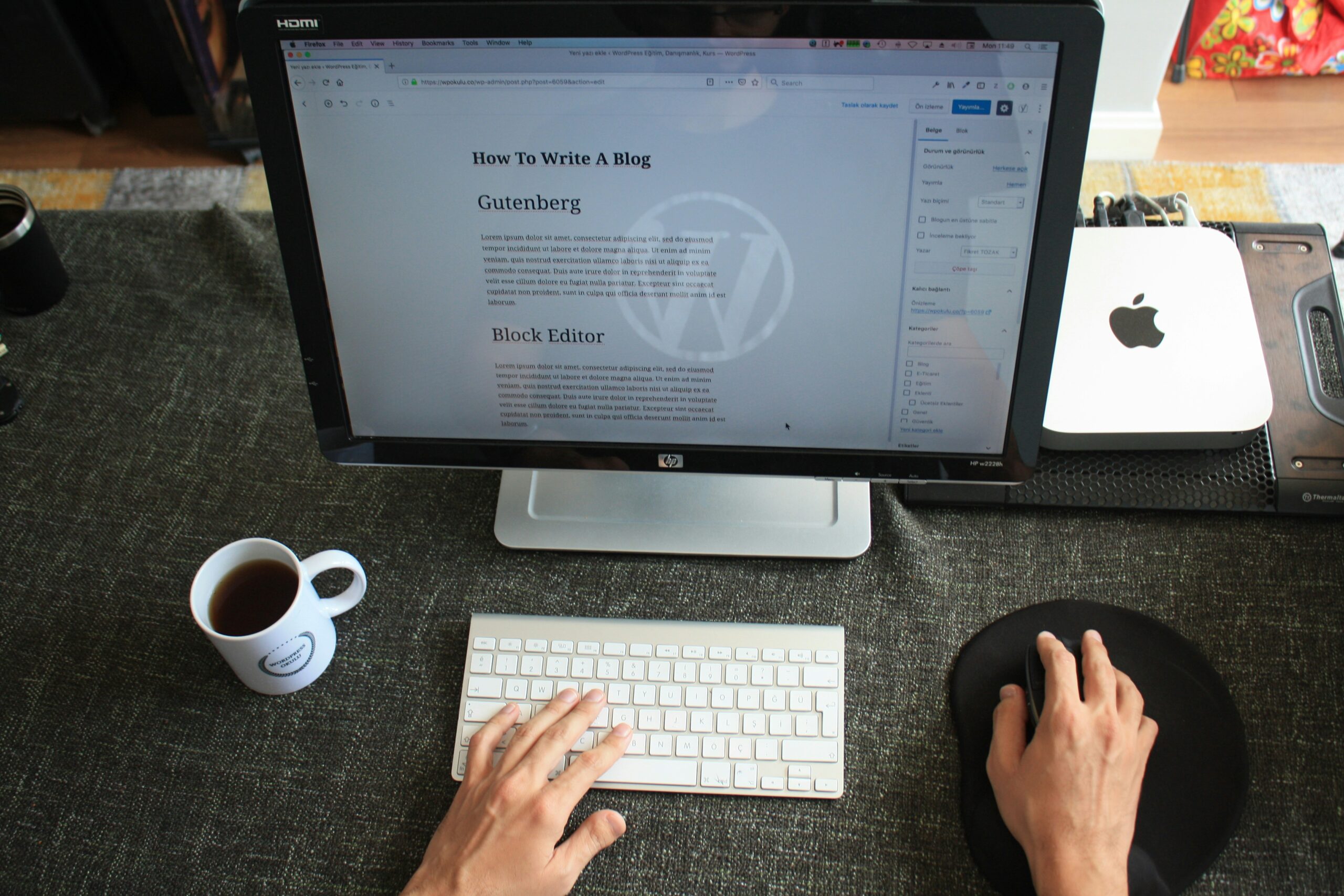
Photo by Fikret tozak on Unsplash
Leave a Reply