
Category: Professional Insights
-
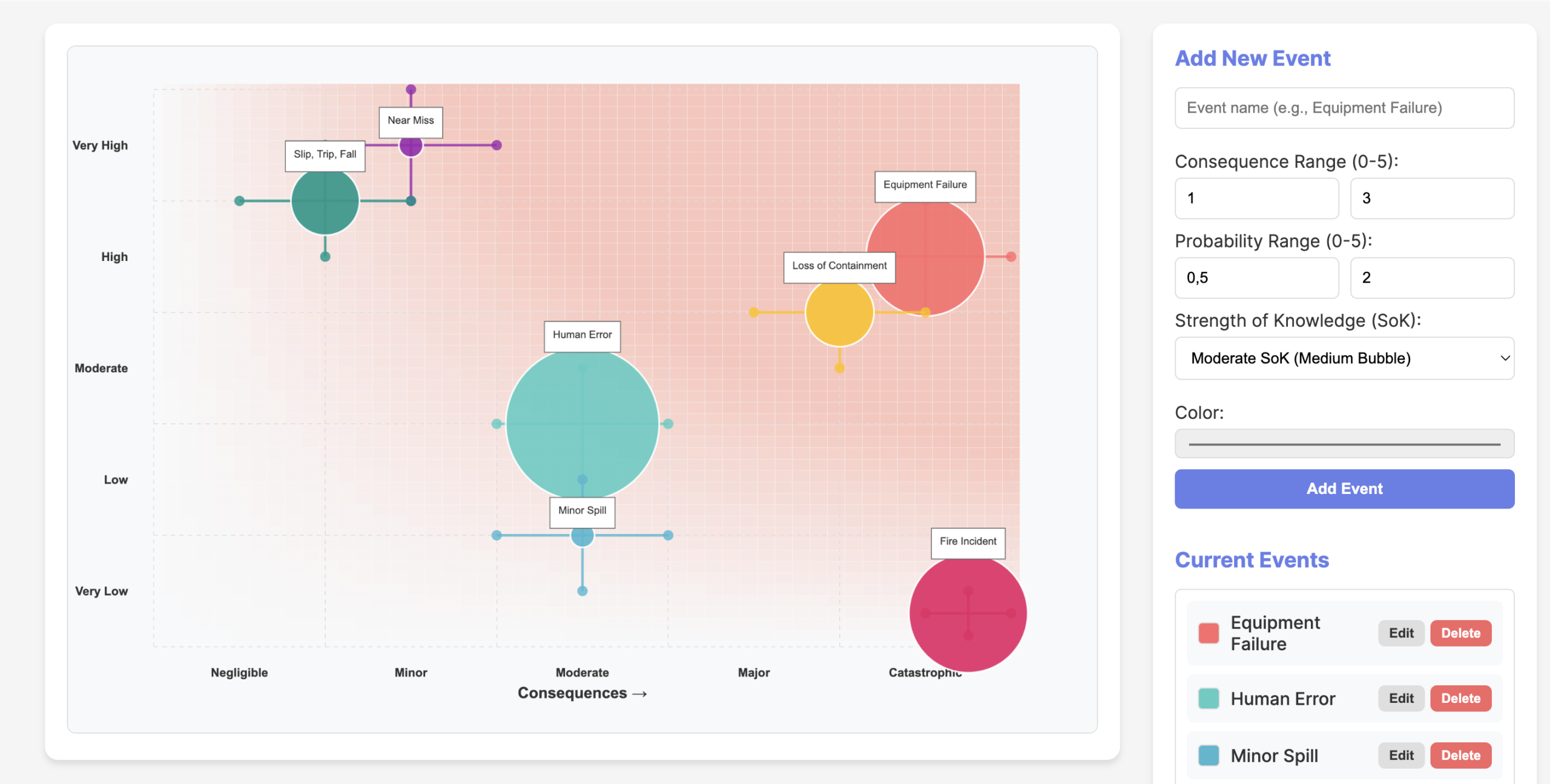
Visualising Risk In The Era Of AI. Do We Need A New Risk Definition?
Scrolling through LinkedIn, I came across a post from the Society for Risk Analysis pointing to a new publication, Redesigning Risk Assessments in the Age of AI: Emergence of the Opacity Risk Dimension by Helmi Issa. It has a strong focus on visualising risk, which has become my main topic, so it caught my eye.…
-
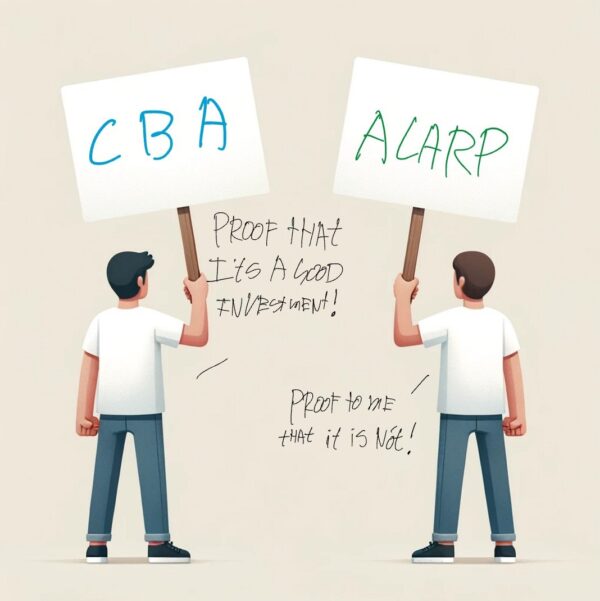
ALARP Check: How to Determine Whether a Safety Measure Should Be Implemented
ALARP is often used in HSE management. But how to actually implement it? This post covers what ALARP means, where it comes from, and how to work through it systematically. What Does ALARP Mean? ALARP stands for As Low As Reasonably Practicable. It is a principle used in safety management that states a risk-reducing measure…
-
Rethinking Risk Matrices: A Scoping Review of Probability Consequence Diagrams and Decision Framework for Diagram Selection
Two years ago, when I first started learning the academic side of risk analysis at the University of Stavanger, I discovered the gaps between academics and risk management in practice. Most of these gaps can be traced back to the way risk is defined. The risk definition, which involves multiplying probability by consequences (C×P), is…
-
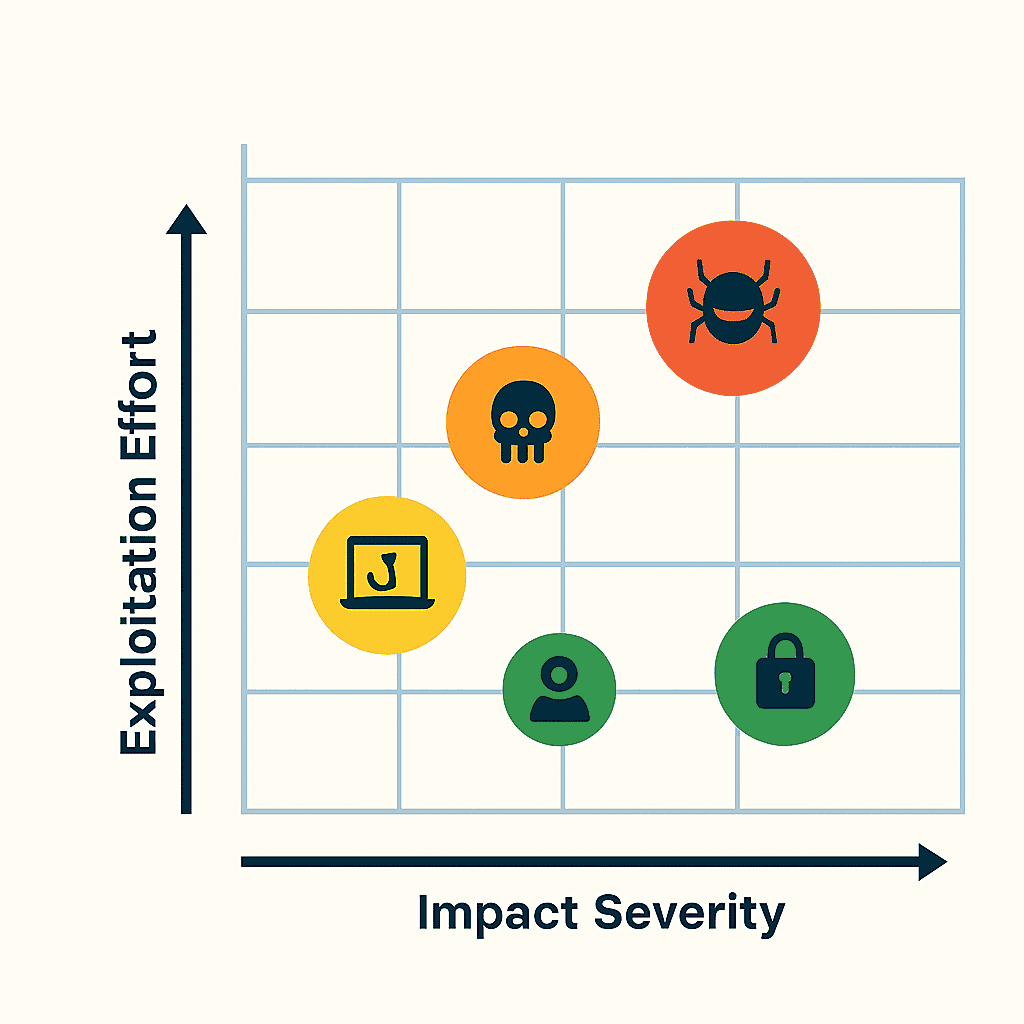
How to Create a Risk Matrix for Cyber Security using Python
Creating this cybersecurity risk matrix visualisation is more straightforward than it might initially appear. I’ve provided the complete Python code for generating this matrix, which uses matplotlib and numpy libraries. Install the required libraries (pip install matplotlib numpy) and run the script to generate your own cybersecurity risk assessment visualisation.
-

Frequently Asked Questions about Risk: Answers to the Most Searched Questions
My keyword research revealed questions about risk management that remain unanswered online. For some of the questions that did have answers, I didn;t fully agree with explanations I found. There where also questions to which I had no idea what the answer was, even after studying and working with safety and risk for over 10…
-
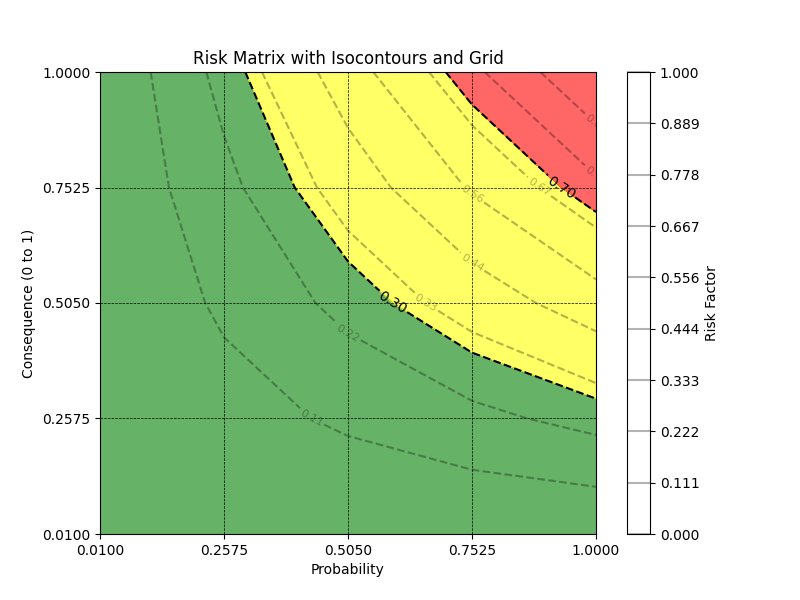
How to make a Traditional Quantitative Risk Matrix from Scratch
Risk matrices are liked because of their simplicity. However, this simplicity comes at a high cost in terms of model error, potentially leading to worse-than-useless decision support. They should therefore be used and constructed with care.
-
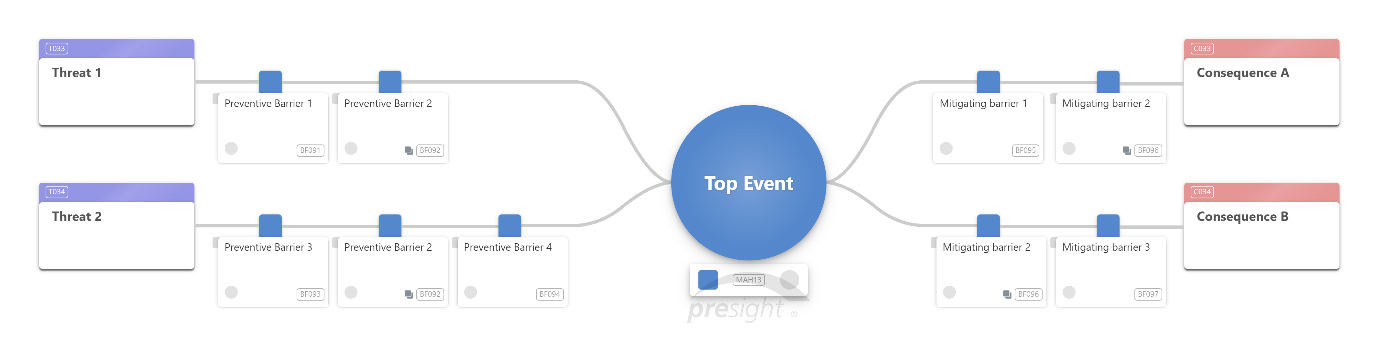
Visual Risk Communication: How Bowtie Diagrams Improve Understanding
Contemporary risks have become more complex, making risk communication more challenging and crucial. This complexity often involves a variety of different stakeholders with their own unique perceptions, understanding and prepositions. Therefore, it is important to employ different risk communication methods to explain these effectively.
-

Selecting a Risk Assessment Method for Reputational Risk Management
Reputational risk is complex and often intangible, making it challenging to identify and assess using traditional methods. This complexity necessitates risk identification techniques that can capture uncertainties and provide a comprehensive understanding of potential threats.
-
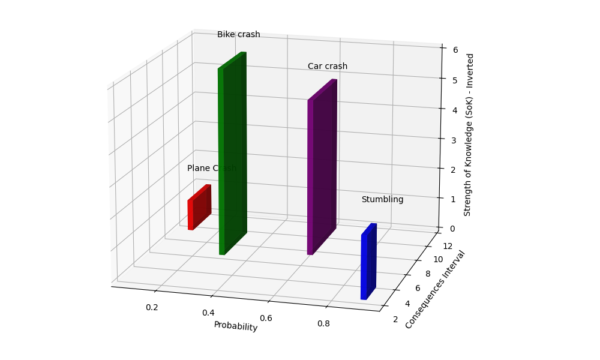
Which Risk Visualisation to Use?
Introduction Risk can be visualised in different ways, each offering unique strengths depending on the decision-making context. Below are 8 risk visualisations and insights on when to use them. 1. Risk Matrix A risk matrix is one of the most common risk visualisation tools, plotting risks in a two-dimensional grid of probability vs. impact. Risks…
-
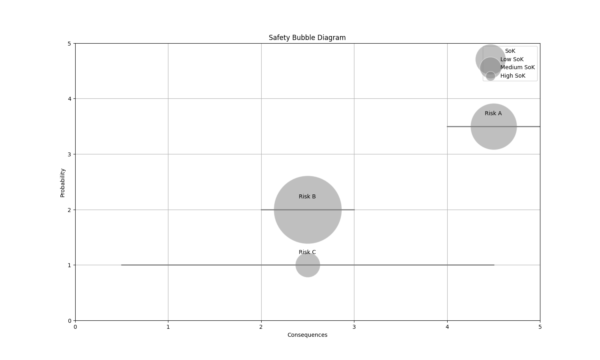
How to make a Safety Bubble Diagram
In contemporary risk science, risk is seen from a broader perspective than just the likelihood and consequences of potential events. Aven 2013 introduces a new way of looking at risk that incorporates not just the probability and consequences, but also the uncertainties related to these consequences and probabilities.
-
Beyond Expectations: Visualising Safety Risks in Arctic Environments
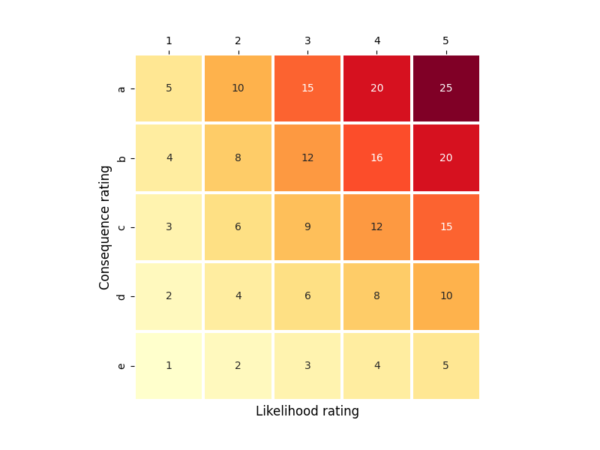
Introduction The Arctic environment presents significant challenges for risk management due to its extreme conditions and the accelerating effects of climate change. The Arctic is characterized by very low temperatures, long periods of darkness, rapidly changing weather, and unstable natural phenomena such as glaciers and avalanches (Rainville et al., 2020). Climate change in this region…
-
Abstract and Presentation: Visualising Safety Risks in Arctic Environments
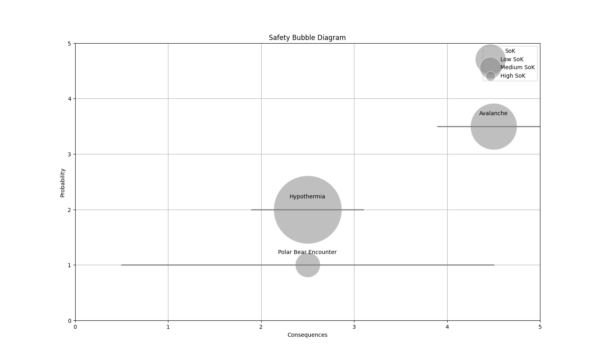
The Arctic environment is characterised by extreme conditions and high levels of uncertainty, creating significant safety risks for operations in the region. Risk awareness is critical for managing these safety risks, as decision-makers must be able to assess and respond to rapidly changing circumstances. In this context, effective risk visualization plays a crucial role in…
-

-
PDCA, What is the difference between Do and Act?
The PDCA (Plan-Do-Check-Act) or Deming cycle stands as a fundamental framework. However, a question often arises: Why do we need the Act phase when we could simply move from Check to Plan?
-

GDPR Compliance and its Reflection in Risk Communication: Insights from Annual Reports
The enactment of GDPR marked a significant shift in data protection laws, aiming to enhance and standardize privacy rights and protections across the European Union. This paper examines the adjustments in risk communication practices within annual reports and assesses whether these changes align with best practices in the field. Introduction Communication forms the basis of…
-

Podcast Episodes About Risk
In the ”In Good Company” podcast, the CEO of Shell, Wael Sawan discusses balancing strict safety protocol and innovation with Nicolai Tangen. Naval Ravikant and Tim Firres discuss different ways of looking at risks and their related assumptions. They discuss the importance of understanding and managing risk in both personal and professional contexts, offering philosophical…
-

Risk Compensation and Studded Tires in Norway; Are Studded Tires Actually Safer?
In this article, we will delve into the safety and behavior aspects related to driving with or without studded tires in winter conditions in Norway. We will pursue the question of whether drivers take more risk when using studded tires. A theory referred to as ‘Risk compensation’. The question we will try to answer is:…
-
Understanding Risk Perception: A Critical Look at Cultural Theory
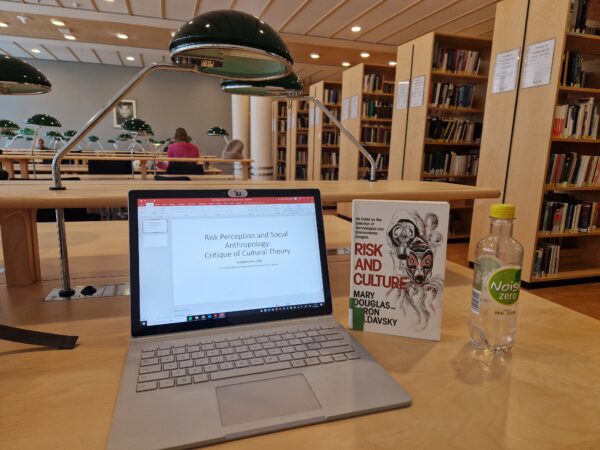
In the article, Risk Perception and Social Anthropology: Critique of Cultural Theory by Åsa Boholm 1996 Boholm challenges the approach of generalizing risk attitudes based on cultural frameworks. She suggests that individuals’ responses to risk are dynamic, and influenced by changing contexts and social environments. The article pretty much marked the end of using cultural…
-

Article summary: Perception of Risk by Paul Slovic (1987)
IntroductionThe article discusses risk perception and its significance in evaluating hazardous activities and technologies. The research on risk perception aims to assist in risk analysis and policy-making by understanding public responses to hazards and improving the communication of risk information. It emphasizes the importance of comprehending how people think about and respond to risk for…
-

Summary of ‘Risk as Analysis and Risk as Feelings’ by Paul Slovic et al. (2004)”
In this blogpost I will provide a summary and elucidate the scientific concepts described in the paper ‘’Risk as Analysis and Risk as Feelings: Some Thoughts about Affect, Reason, Risk, and Rationality’’ by Paul Slovic, Melissa L. Finucane, Ellen Peters and Donald G. MacGregor (2004).