



Risk Analysis Tools

Risk Matrix Generator
Build a risk matrix that communicates risk without oversimplifying

SoK Assessment Tool
Explain uncertainty by visualising the Strength of Knowledge behind your risk assessment

Monte Carlo Simulator
Run a simulation to see how likely certain outcomes are
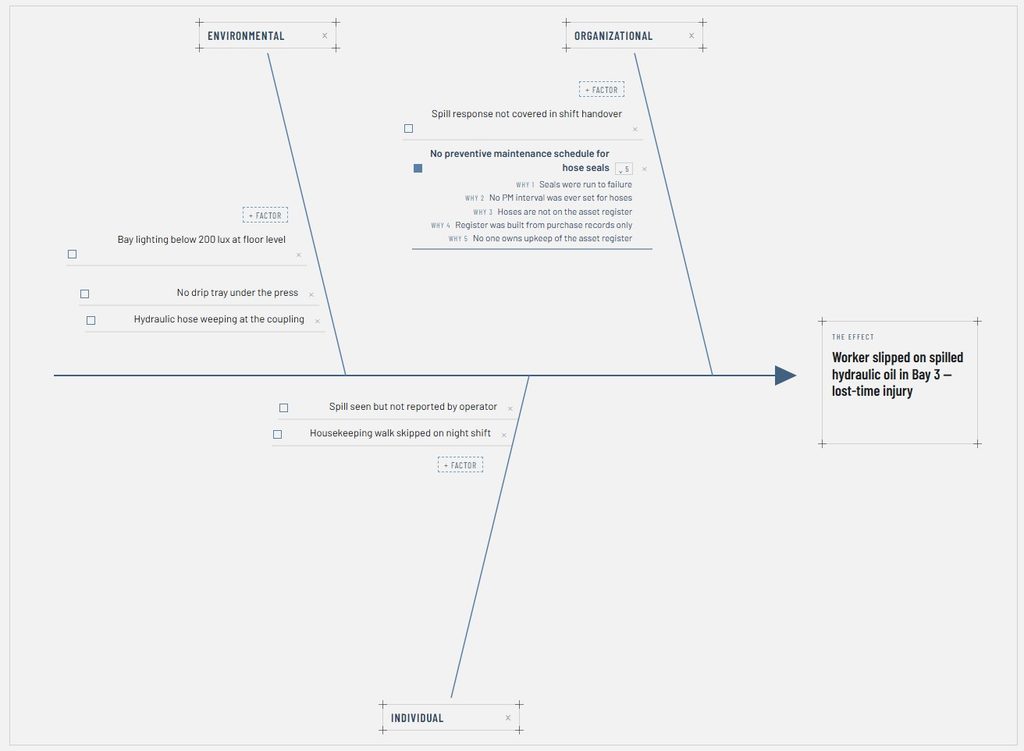
Ishikawa-diagram creator
Map causes among different categories to investigate an Incident
Blog
-
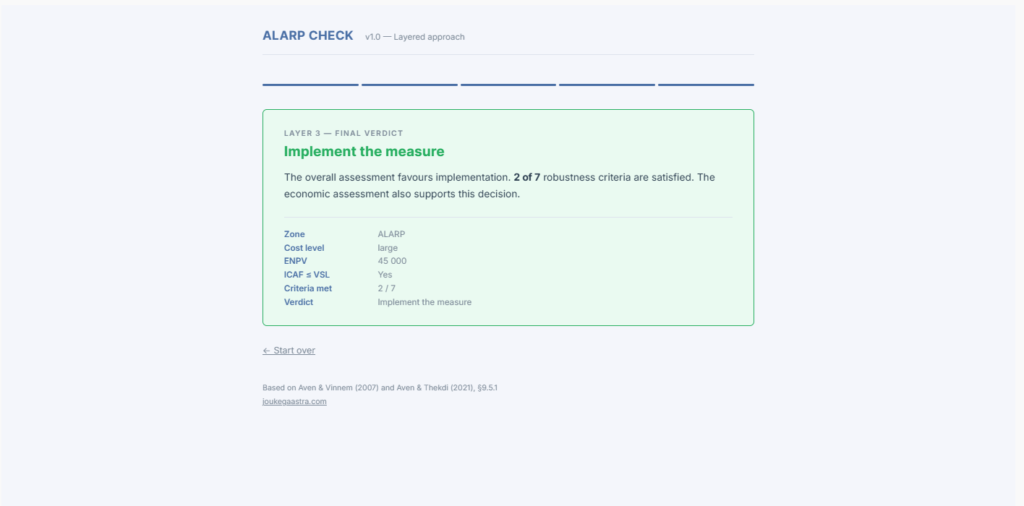
ALARP is often used in HSE management. But how to actually implement it? This post covers what ALARP means, where it comes from, and how to work through it systematically. What Does ALARP Mean? ALARP stands for As Low As…
-

Rethinking Risk Matrices: A Scoping Review of Probability Consequence Diagrams and Decision Framework for Diagram Selection
Two years ago, when I first started learning the academic side of risk analysis at the University of Stavanger, I discovered the gaps between academics and risk management in practice. Most of these gaps can be traced back to the…
-

How to make a Traditional Quantitative Risk Matrix from Scratch
Risk matrices are liked because of their simplicity. However, this simplicity comes at a high cost in terms of model error, potentially leading to worse-than-useless decision support. They should therefore be used and constructed with care.
-

Rainy Day Activities in Stavanger: Having Fun When It Pours
Living in Stavanger means accepting a simple truth: Rainy days are the default, and sunny days are the exception. Luckily, there are plenty of things to do that don’t feel like a compromise but become better on a rainy day.
-

Review: The 7 Habits of Highly Effective People
In a world of quick-fix solutions and viral productivity hacks, “The 7 Habits” stands out for its comprehensive, principle-centered approach. It’s not just about being more productive – it’s about becoming more effective in every role you play.
-

Sapiens: A Brilliant History with Some Debatable Claims
If you’ve spent any time around me lately, you’ve probably heard me talk about Yuval Noah Harari’s “Sapiens.” It’s a book that makes you look at humanity through an entirely different lens. While I found it brilliant overall, there are…
Subscribe
Receive each new blog post in your Email. Once a week, easy to sign up, easy to cancel.