



Risk Analysis Tools

Risk Matrix Generator
Build a risk matrix that communicates risk without oversimplifying

SoK Assessment Tool
Explain uncertainty by visualising the Strength of Knowledge behind your risk assessment

Monte Carlo Simulator
Run a simulation to see how likely certain outcomes are
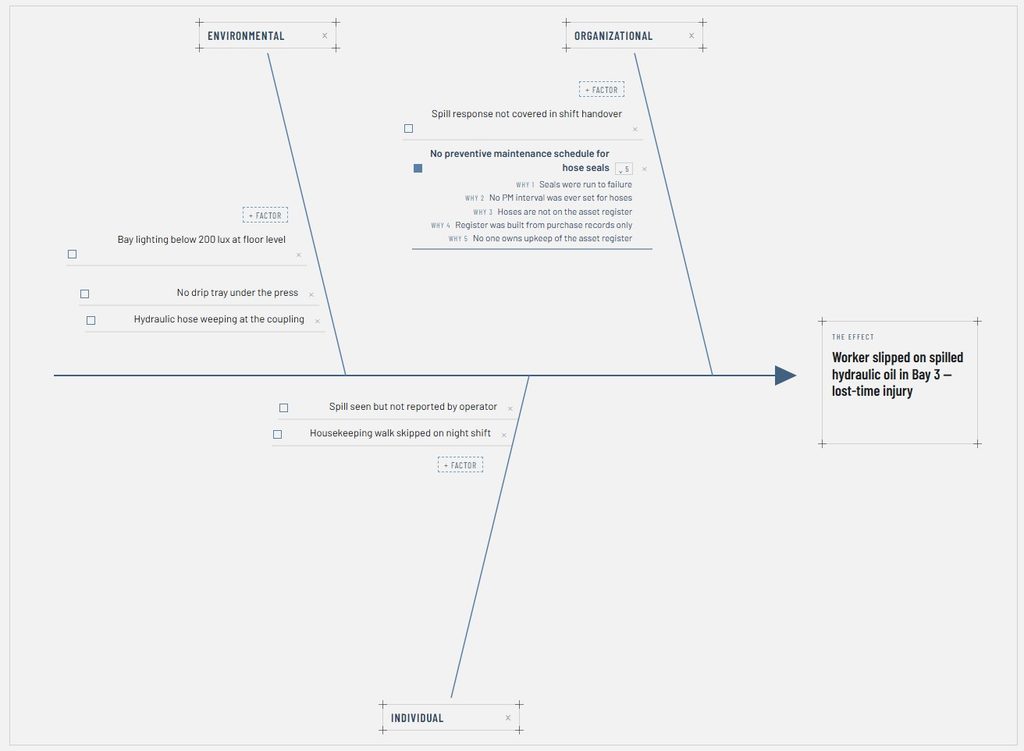
Ishikawa-diagram creator
Map causes among different categories to investigate an Incident
Blog
-
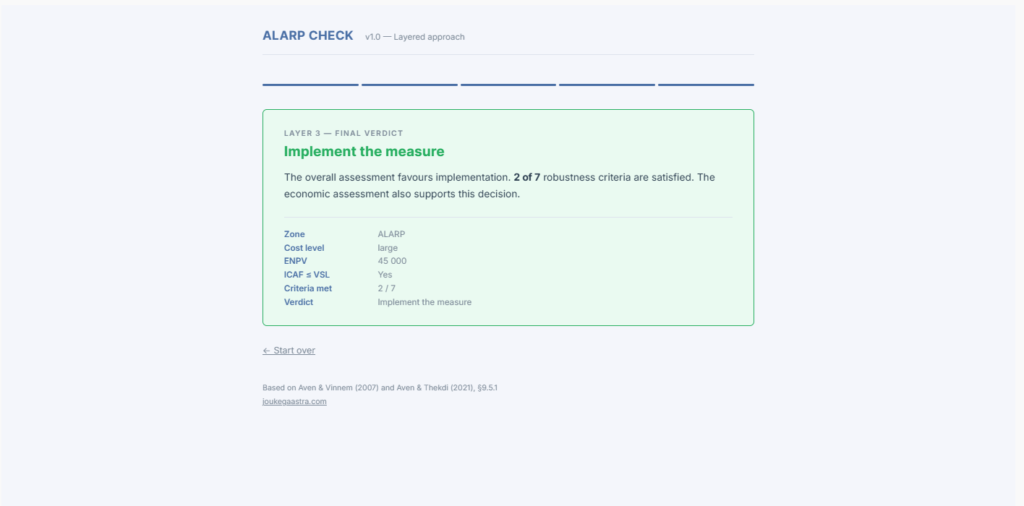
ALARP is often used in HSE management. But how to actually implement it? This post covers what ALARP means, where it comes from, and how to work through it systematically. What Does ALARP Mean? ALARP stands for As Low As…
-

Rethinking Risk Matrices: A Scoping Review of Probability Consequence Diagrams and Decision Framework for Diagram Selection
Two years ago, when I first started learning the academic side of risk analysis at the University of Stavanger, I discovered the gaps between academics and risk management in practice. Most of these gaps can be traced back to the…
-

My Duolingo 2025 Rewind: Three Years, 16 Hours, and Some More Strange Sentences
My Duolingo streak just passed 1102 days. That’s three years of daily Norwegian practice without breaking the chain (with some help from streak freezes though). As with every app nowadays, Duolingo provided me with a 2025 review. The Numbers According…
-

Latest Frameworks for Assessing Strength of Knowledge (SoK) in Risk Analysis: Academic Insights and Practical Methods
Modern risk definitions recognise that risk isn’t just about probability and consequence; it fundamentally involves uncertainty. This uncertainty can be operationalised through probability (P) and the Strength of Knowledge (SoK) assessments. Within the industry, a risk definition including an aspect…
-

Open Source Geographical Data in Norway: Essential Knowledge for Professional and Personal Use
When I moved to Norway three-ish years ago, I quickly learned that understanding geography here means more than just looking at the distance between two points. Because of fjords, mountains, ferries, and tunnels, the shortest distance between two points is…
-

Monte Carlo Simulation Explaind Simply
“Must have experience with Monte Carlo simulation.” I see this line often in risk management job postings. It appears in course descriptions, textbooks, and LinkedIn skill endorsements. Yet, few people actually understand what’s happening. I get it. The mathematics can…
Subscribe
Receive each new blog post in your Email. Once a week, easy to sign up, easy to cancel.