



Risk Analysis Tools

Risk Matrix Generator
Build a risk matrix that communicates risk without oversimplifying

SoK Assessment Tool
Explain uncertainty by visualising the Strength of Knowledge behind your risk assessment

Monte Carlo Simulator
Run a simulation to see how likely certain outcomes are
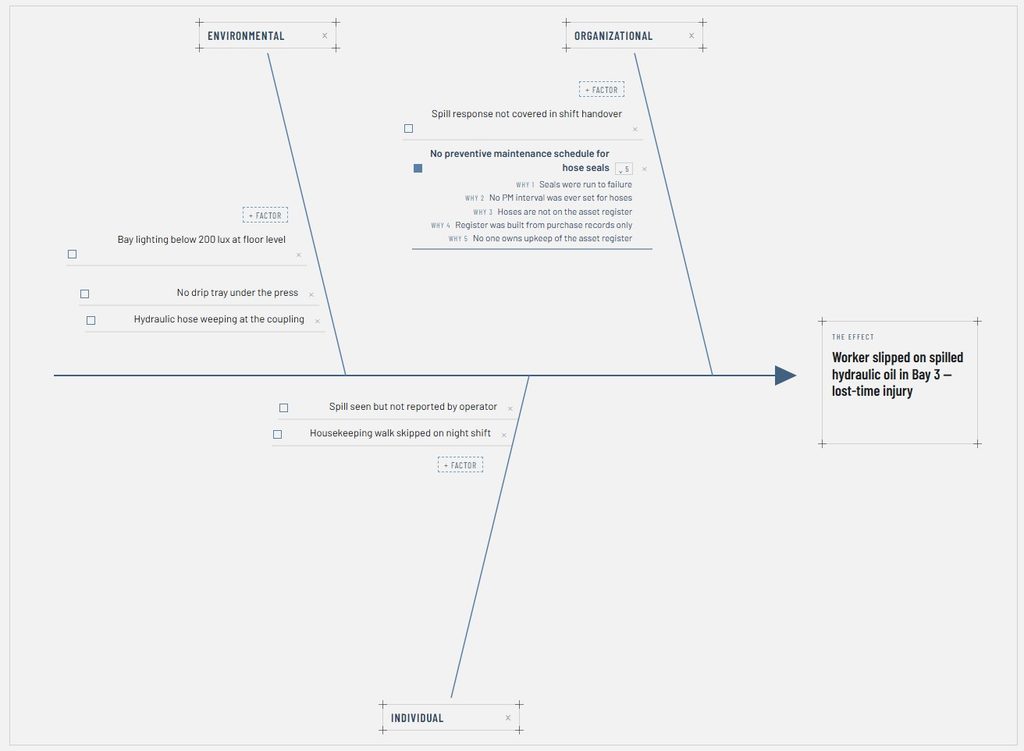
Ishikawa-diagram creator
Map causes among different categories to investigate an Incident
Blog
-
ALARP is often used in HSE management. But how to actually implement it? This post covers what ALARP means, where it comes from, and how to work through it systematically. What Does ALARP Mean? ALARP stands for As Low As…
-

Rethinking Risk Matrices: A Scoping Review of Probability Consequence Diagrams and Decision Framework for Diagram Selection
Two years ago, when I first started learning the academic side of risk analysis at the University of Stavanger, I discovered the gaps between academics and risk management in practice. Most of these gaps can be traced back to the…
-

RIS515 Theories of Risk Perception and Risk Governance
Introduction This is my summary for the RIS515 course. I have structured this course using the Risk Governance framework and the ‘learning aims’ that have been described in the first lecture. Learning aims Compulsory reading The course consists of the…
-

SAM525 Risk, Society and Ethics 2023
Risk, Society and Ethics (SAM525) is a compulsory course for the Msc. programs Risk management and Societal Safety. The course evolves around 48 problem solving questions. The literature that is used in the course is Risk by Deborah Lupton (2013)…
-

Hiking Hatten in Rogaland
“Hatten” translates to “The Hat,” given its unique shape when seen from certain angles. This short hike packs a punch with its steep ascents and airy sections.
-

Understanding Risk Perception: A Critical Look at Cultural Theory
In the article, Risk Perception and Social Anthropology: Critique of Cultural Theory by Åsa Boholm 1996 Boholm challenges the approach of generalizing risk attitudes based on cultural frameworks. She suggests that individuals’ responses to risk are dynamic, and influenced by…
Subscribe
Receive each new blog post in your Email. Once a week, easy to sign up, easy to cancel.